How to Care for Fine Jewelry
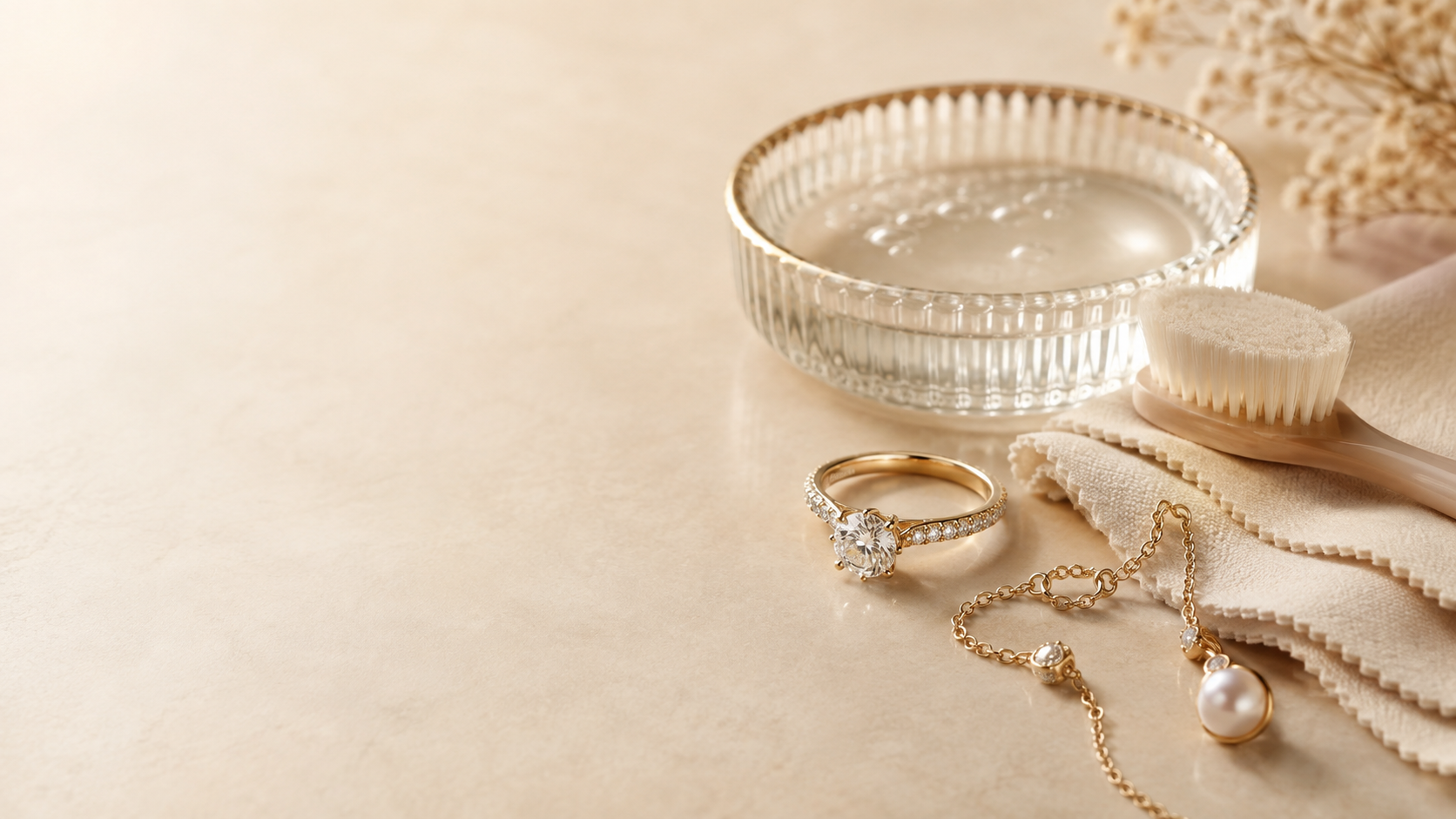
Fine jewelry does not need much. It needs the right small things, done occasionally, and a few things not done at all. Most damage we see is not wear. It is one avoidable event.
What we have learned selling diamonds and building rings — written plainly, and priced against stones we actually stock.

Fine jewelry does not need much. It needs the right small things, done occasionally, and a few things not done at all. Most damage we see is not wear. It is one avoidable event.

The "two months' salary" rule was written by an advertising agency. De Beers introduced it in the 1930s, when the suggestion was one month. It became two months in the 1980s. In Japan the same campaign ran with three. The number moved because it was a marketing lever, not because anything about diamonds or marriage changed. That is worth knowing before you let it anchor one of the larger purchases of your life.

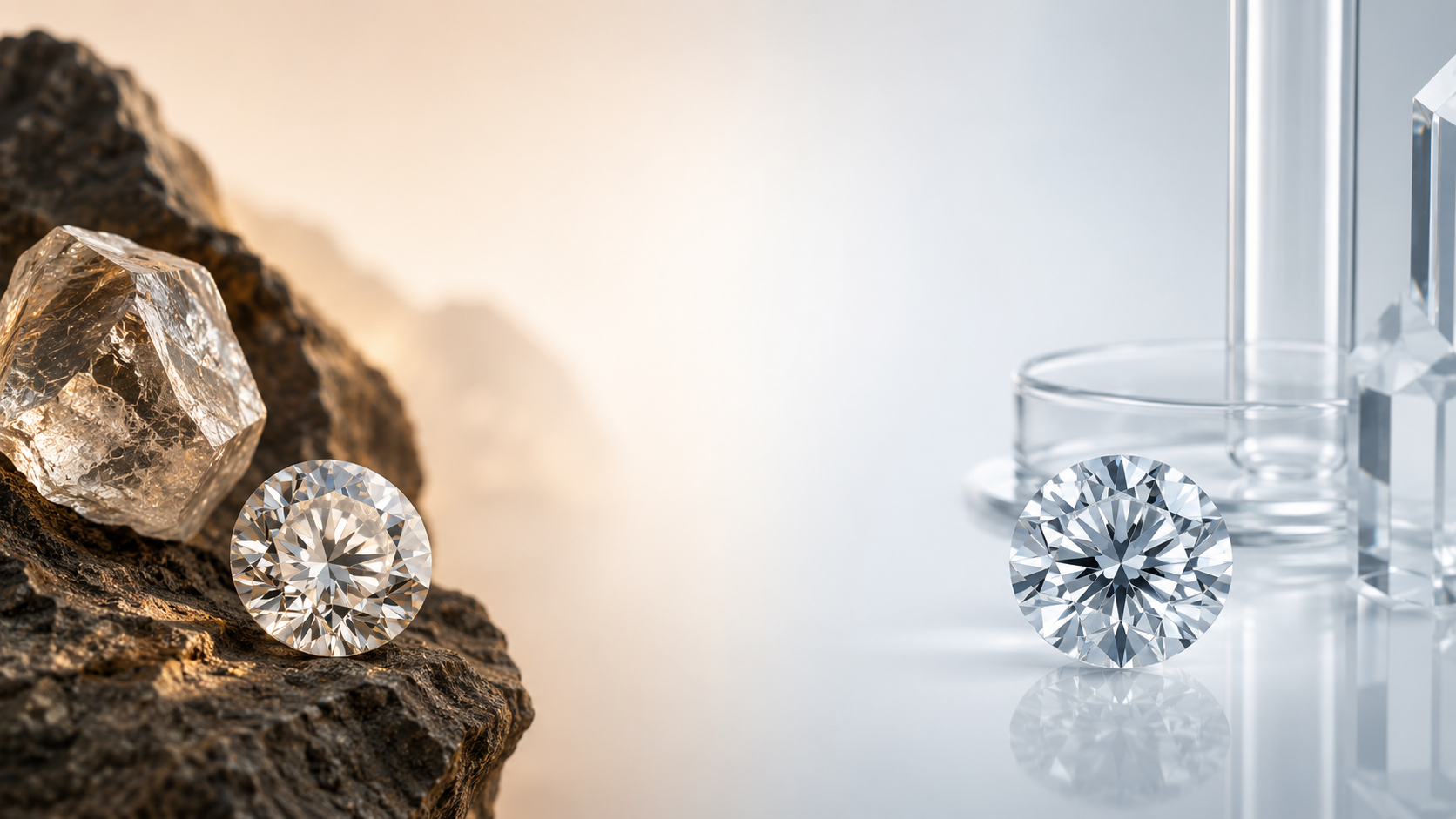
Two diamonds sit side by side. Same round cut, same G colour, same VS1 clarity, same 1.50 carats. One costs about $9,600. The other costs about $280. Under a loupe, a jeweller cannot tell them apart. Neither can a gemmologist without specialised equipment. They are both crystalline carbon, both a 10 on the Mohs hardness scale, both refracting light in exactly the same way. The difference is that one formed underground over a billion years and the other formed in a reactor over a few weeks. Whether that difference is worth $9,300 is a real question, and it does not have one right answer. But it does have a shape, and the shape is more interesting than most people expect.

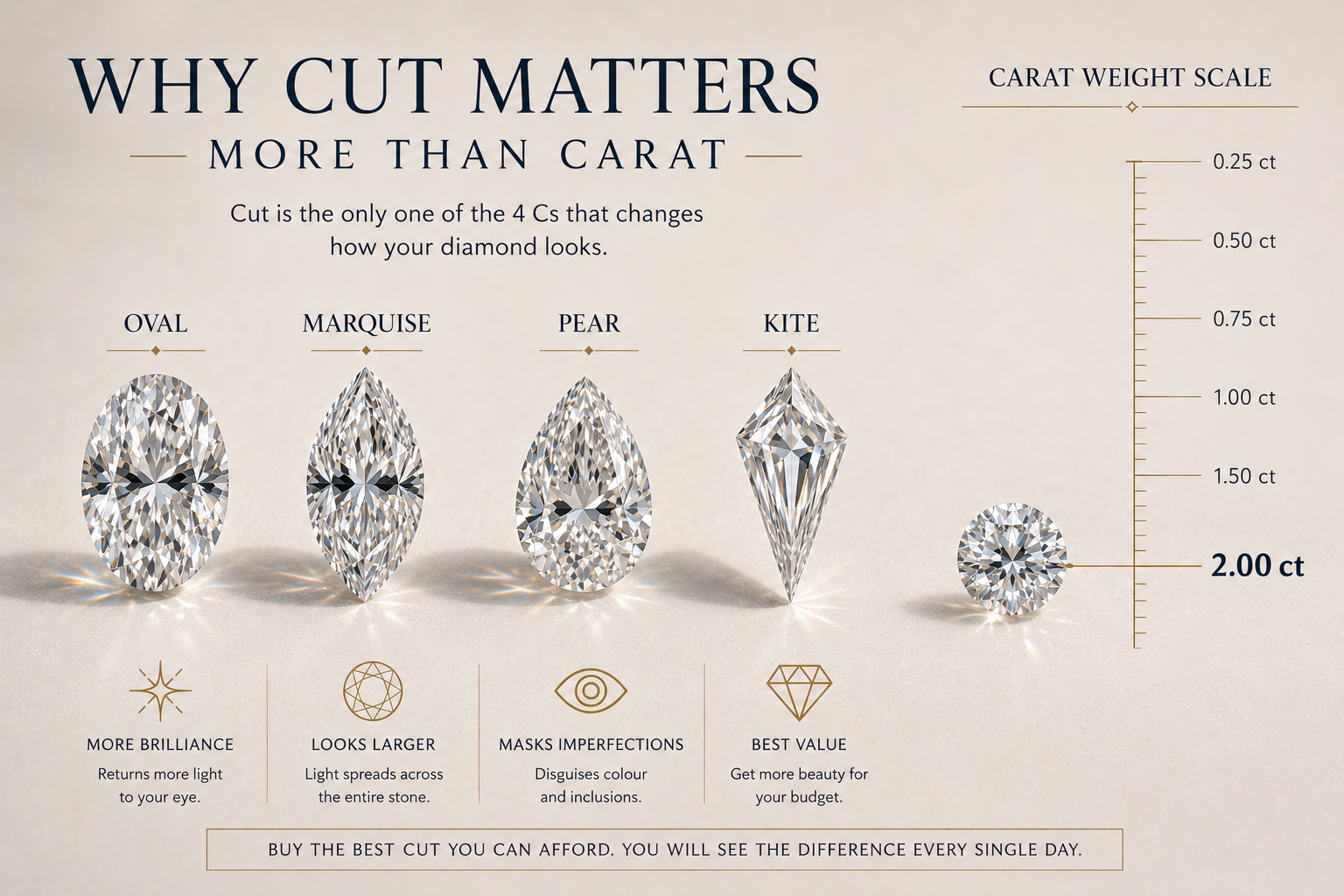
Ask someone about their engagement ring and they will tell you the carat weight. Almost nobody mentions the cut. This is backwards. Of the four Cs, cut is the only one that changes how the diamond actually looks — and it is the one most often given up to reach a number that sounds good.